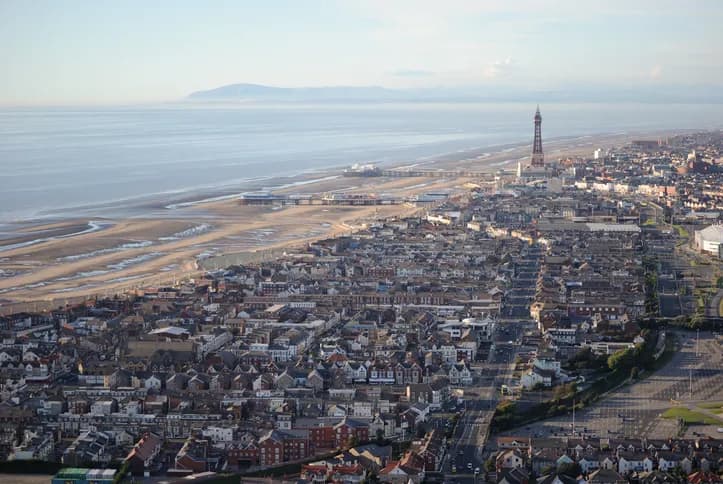
Blackpool Magazine arrives at a pivotal moment for this historic Lancashire seaside town. With a population of approximately 141,000 residents and an economy that welcomes over 20 million visitors annually, Blackpool remains one of Britain's most distinctive coastal communities.
A Town Built on Entertainment
Blackpool's identity has been shaped by tourism since the mid-18th century, when sea bathing first drew visitors to the Fylde peninsula. The arrival of the railway branch line in 1846 transformed the hamlet into a thriving resort, and by 1951 the population had reached its peak of 147,000 residents.
Today, the tourism sector supports an estimated 25,000 full-time equivalent jobs, representing one in five positions across the workforce. In 2022, visitors contributed £1.7 billion to the local economy. The town's seven-mile sandy beach, three Victorian piers, and world-famous Illuminations, which now extend over five miles using more than one million LED bulbs, continue to draw crowds from across the United Kingdom.
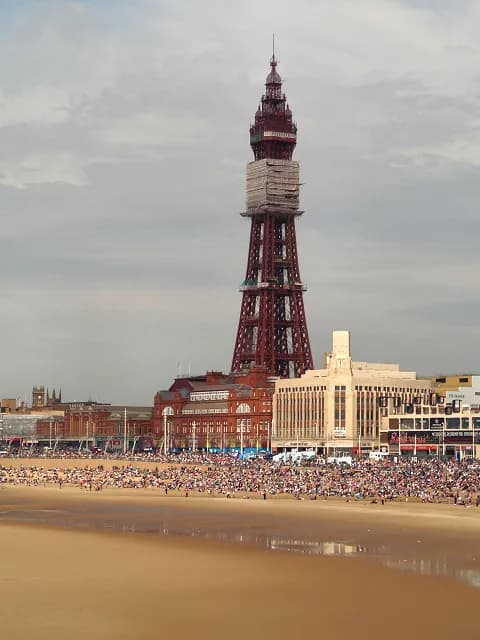
The Blackpool Tower, opened in 1894 and standing at 518 feet 9 inches, remains the town's most recognisable landmark. Grade I listed since 1973, the Tower houses the iconic ballroom that has featured in BBC programmes including Strictly Come Dancing. Blackpool Pleasure Beach, founded in 1896 and now rebranded as Pleasure Beach Resort, occupies 42 acres and operates 31 attractions including ten roller coasters.
Economic Realities and Regeneration
Despite its enduring popularity, Blackpool faces significant economic challenges. The local economy remains relatively undiversified and firmly rooted in the tourism sector, leaving it vulnerable to changing holiday patterns and overseas competition that has grown since the 1960s.
Regeneration efforts are underway. Blackpool Council purchased the Tower in March 2010, and from August 2025 the landmark will be operated by Blackpool Tourism Ltd. Major projects including the Talbot Gateway development and the Blackpool Central scheme aim to modernise the town centre whilst preserving its Victorian heritage.
The council has also committed to addressing climate concerns, with a pledge to achieve net zero carbon emissions by 2030 and a transition to 100 per cent clean energy use.
Demographic Shifts
The 2021 census recorded Blackpool's population at 141,000, a decrease of 1,100 since 2011. However, 2024 estimates suggest the figure has risen to approximately 144,191. The population density of 4,091 per square kilometre makes Blackpool the third most densely populated local authority in North West England.
Significant demographic changes are emerging. The 2021 census found that 41.0 per cent of residents reported no religion, compared with 50.8 per cent identifying as Christian. The population is also ageing: projections indicate the over-65s will reach 36,000 residents, or 26 per cent of the total population, by 2044.
The Local Media Landscape
Blackpool's media environment has contracted considerably in recent years. The Blackpool Gazette, founded in 1873, remains the town's daily newspaper but recorded a circulation of just 2,555 in 2023 under the editorship of Vanessa Sims. Radio Wave 96.5, which launched in 1992, ceased broadcasting in August 2020 and was absorbed into the Greatest Hits Radio network.
New digital radio stations arrived in September 2022, including 106.5 Central Radio, Sandgrounder Radio, and Happy Radio. BBC Radio Lancashire provides additional coverage of the area.
Why Blackpool Magazine Matters
This publication emerges at a time when dedicated local journalism has become increasingly scarce. Blackpool is governed as a unitary authority, with Labour-controlled Blackpool Council led by Councillor Lynn Williams. The town is represented in Parliament by Lorraine Beavers (Blackpool North and Fleetwood) and Chris Webb, who won the Blackpool South seat in a 2024 by-election.
From the tramway that opened in 1885 as one of the world's earliest electric systems to the Winter Gardens' Empress Ballroom and Opera House, Blackpool possesses a cultural infrastructure that few towns of comparable size can match. The 100th anniversary of the Blackpool Dance Festival in 2026 and the 20th anniversary of Blackpool Pride demonstrate the town's continuing role as a cultural hub.
Blackpool Magazine aims to document this community with the depth and attention it deserves: reporting on council decisions that affect residents' daily lives, profiling the businesses that employ local workers, and celebrating the cultural events that distinguish the Fylde Coast. In a town where one in five jobs depends on visitors, understanding how Blackpool functions, where it struggles, and where it succeeds is not merely of academic interest; it is essential to the livelihoods of thousands of families.
The publication will cover the stories that matter to Blackpool residents: developments at the Pleasure Beach, changes to the Illuminations, transport improvements along the tramway, and the ongoing regeneration projects that will shape the town's future. As Blackpool continues to balance its heritage as a Victorian resort with the demands of modern tourism and local governance, this magazine intends to serve as a reliable chronicler of that evolution.